More than 5 billion mobile phones sit unused in homes and offices worldwide. At the same time, the economics of buying a new smartphone are changing. Global smartphone retail prices have risen by around 15% so far in 2026, while new smartphone shipments are under pressure from rising component and memory costs.
As new devices become more expensive, the secondary smartphone market is becoming an increasingly important source of supply and value. For the refurbishment industry, this creates an interesting contradiction.
More devices could potentially be brought back into circulation and demand for them is stronger, but processing them reliably at scale is becoming more important and more difficult.
That is where diagnostics becomes more than a testing function. It becomes part of the infrastructure needed to make a growing secondary market work.
The secondary market is gaining momentum
The growth of the secondary smartphone market is not new, but 2026 is adding several factors that could accelerate it.
FDM CCS Insight reported that the organized secondary smartphone market grew 3% year-on-year in Q2 2026, despite significant supply constraints. For the full year, it forecasts 9% growth in the organized secondary market. At the same time, new smartphone shipments fell 7% in Q2, with rising memory costs pushing prices higher and weakening consumer demand.
Counterpoint Research is seeing the same broader shift. Its latest Global Pre-Owned Smartphone Market Tracker, published in August 2026, tracks the growing pre-owned and refurbished market against new smartphone sales and highlights the impact of memory shortages, changing consumer behaviour and regional market dynamics.
The trend is particularly visible in India. Refurbished smartphone volumes grew 13% year-on-year in H1 2026, even as new smartphone volumes declined by around 11%. Counterpoint expects India’s refurbished smartphone market to grow 16% for the full year.
There is also a broader shift toward premium devices.. Counterpoint reports that premium smartphones accounted for a record 29% of global smartphone sales volume in H1 2026, up from 25% in 2025. As these devices move through upgrade, trade-in and buyback programmes, they can also become an increasingly valuable source of supply for the secondary market.
The direction is clear: more valuable devices are entering the secondary market, while new-device price pressure is making refurbished alternatives increasingly attractive.
But that raises another question.
Where will all these devices come from?
The potential supply is enormous.
The GSMA estimates that more than 5 billion mobile phones are currently inactive, sitting in homes and offices globally. To accelerate the movement of these devices back into the circular economy, participating mobile operators have committed to collecting used devices equivalent to at least 20% of the number of new devices they distribute directly to customers by 2030. They have also committed to ensuring that 100% of devices collected through operator take-back schemes are repaired, reused, or transferred to controlled recycling organizations.
That creates a significant opportunity for the refurbishment ecosystem.
But a returned phone is not automatically a refurbished phone.
Every device entering a trade-in, take-back, or recommerce channel needs to be assessed before a business can determine what it is worth and what should happen to it.
One device may be ready for resale. Another may need a battery or component replacement. A third may have a device-status issue that makes refurbishment commercially unattractive.
The challenge is therefore not simply collecting more devices. It is making better decisions about every device that enters the system.
The real value of a returned device is not always obvious
A smartphone can look almost perfect and still have problems that materially affect its value.
Battery condition, faulty sensors, damaged microphones, defective cameras, replacement components, or blacklist status may not be visible during a basic visual inspection.
At the same time, a device that fails one test is not necessarily a lost device. If the issue can be repaired economically, it may still have significant resale value.
This makes device assessment an important part of the economics of refurbishment.
The business needs to answer questions such as:
- Is the device functional?
- Which components or functions need attention?
- Is the battery condition acceptable?
- Is the device eligible for resale?
- Does it have a relevant blacklist or device-status issue?
- What grade does it qualify for?
- Is repair economically justified?
- What information should be documented before resale?
The quality of those answers can directly influence the value recovered from the device.
This is where M360 fits
For refurbishment businesses, the challenge is turning those questions into a repeatable assessment process.
This is where M360 Diagnostics fits into the secondary-device workflow.
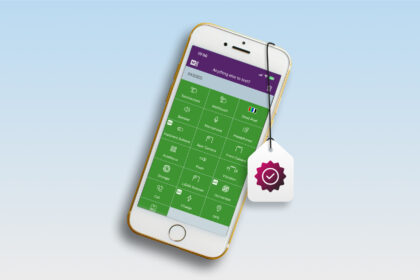
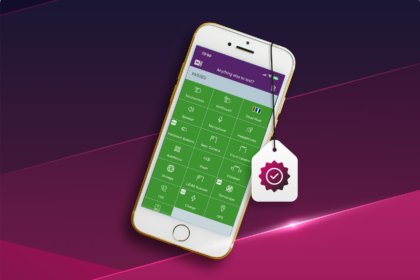
M360 provides structured diagnostic workflows for smartphones and tablets, combining automated and interactive testing with device-status checks and other device-level information.
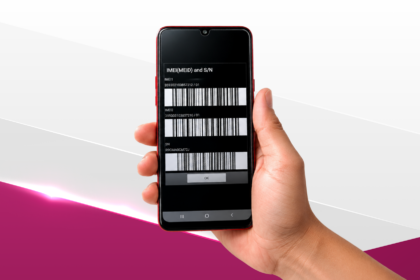
With 80+ diagnostic checks, IMEI and blacklist checks, OEM part validation for supported iOS devices, device grading, certified data erasure and certification, M360 gives refurbishers a more complete view of the individual device before decisions are made about it.
The objective is not simply to produce a Pass or Fail result.
It is to provide reliable device information that can support the next decision.
That might mean sending a device to repair, assigning a grade, preparing it for resale, or determining that further refurbishment is not commercially worthwhile.
Scale makes consistency a competitive advantage
At low volumes, experienced technicians can rely heavily on manual inspection and established routines.
At hundreds or thousands of devices, that becomes much harder to control.
Different operators may perform slightly different checks. Results can be recorded differently. Defects can be missed. A device can be assigned a grade based on incomplete information.
The problem is not only speed.
It is consistency.
M360 allows refurbishment businesses to use predefined diagnostic templates and configure workflows around their own requirements. Automated tests can be combined with interactive checks, while batch processing helps high-volume operations process multiple devices efficiently.
This means the business can standardize how devices are assessed without requiring every operator to rely on memory or individual testing habits.
And as the organized secondary market grows, this kind of standardization becomes increasingly important.
Counterpoint’s research on India illustrates the direction of travel: the organized channel currently accounts for around 20% of the country’s refurbished smartphone market, while the remaining 80% is still unorganized. At the same time, established retailers, OEMs, recommerce platforms, and certified refurbishment players are expanding their presence, with stronger quality standards and transparency becoming increasingly important.
The more professional the market becomes, the more valuable standardized processes become.
Diagnostics is only useful if it supports better decisions
It is easy to compare diagnostic platforms by looking at the number of tests they perform.
But test count alone does not determine how useful diagnostics are to a refurbishment business.
The more important question is:
What can the business do with the information once the tests are complete?
A diagnostic result can help identify a fault. But that result becomes significantly more valuable when it can support the next steps in the device’s lifecycle.
A typical refurbishment workflow might look like:
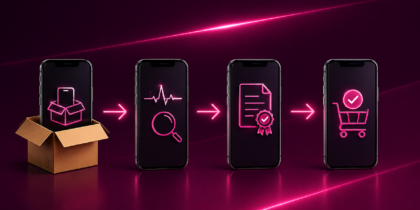
Receive → Identify and check → Diagnose → Repair where required → Re-test → Grade → Erase → Document and certify → Resell
M360 supports several of these device-level stages, while also allowing diagnostic and device information to connect with other systems used in the secondary-device industry.
The point is not for diagnostics software to become responsible for every aspect of acquisition, inventory or resale.
It is to make sure that reliable device information is available where it is needed.
The trust problem is becoming harder to ignore
There is another reason device information matters: the secondary market still has a trust gap.
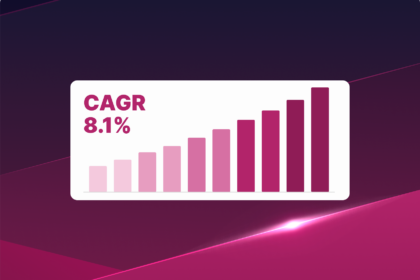
The GSMA’s 2026 Mobile Net Zero research estimates that nearly half of consumers globally are likely to consider a refurbished phone for their next purchase, while a lack of transparency and consumer confidence is limiting actual uptake. The report cites industry forecasts suggesting that new smartphone shipments could fall by around 15% in 2026, while the secondary market could grow by around 8% annually over the next few years. That creates an interesting challenge.
The economic case for refurbished devices is becoming stronger, but consumers still need confidence that the device they are buying is actually in the condition they have been promised.
For the industry, that makes documentation increasingly important.
A seller saying that a device has been “fully tested” is one thing.
A device-specific report showing what was checked and documenting relevant information about its condition is another.
From diagnostic data to certification
This is where M360 Certification extends the value of diagnostics beyond the refurbishment floor.
M360 Certification can turn relevant information collected during the device-processing workflow into a device-specific report, including diagnostic results, device identifiers, battery information, blacklist status, grading, and data-erasure information.
The certificate does not replace the refurbishment process.
It documents the result of that process.
And importantly, the information does not automatically become visible to every party involved in the device’s journey. An M360 account holder can choose to share the appropriate public certificate or report with a reseller or end customer.
This gives the next party documented evidence of the device’s assessed condition rather than requiring them to rely solely on the seller’s description.
As the market becomes more professional, that kind of evidence can become part of the value proposition of the refurbished device itself.
More devices will not automatically mean a better secondary market
The numbers point toward a larger role for refurbished and pre-owned smartphones.
There are billions of dormant devices. New smartphones are becoming more expensive. Consumers are increasingly looking for value. Trade-in and buyback programmes are feeding more devices into secondary channels. And organized players are gradually professionalizing the market.
But none of this guarantees that every returned device will become a successful resale.
The industry still needs to determine:
- which devices are worth refurbishing
- which require repair
- which grade they qualify for
- which devices should move directly to resale
- and which have reached the end of their commercially useful life
That is where accurate device assessment becomes important.
What the market shift means for refurbishers
For refurbishers and resellers, the opportunity in 2026 is not simply more volume.
It is the ability to process that volume while maintaining consistent quality and making economically sound decisions about individual devices.
That means having reliable answers to basic but commercially important questions:
What do we have?
What condition is it in?
Is it worth refurbishing?
What should happen to it next?
What can we document about it when it reaches the market?
M360 is designed to support these decisions with structured diagnostics, device-status checks, grading, certified data erasure, and device-specific certification.
The wider market may be talking about circularity, take-back targets and billions of inactive phones.
For a refurbisher, the challenge is much more concrete:
turning every incoming device into the right next decision.
A bigger secondary market needs better device intelligence
The next phase of the refurbished smartphone market will not be defined only by how many devices enter the secondary channel.
It will also be defined by how efficiently the industry can assess, process and document those devices.
That is where diagnostics has a role to play.
Not as the entire refurbishment operation, and not as a replacement for human expertise, but as the technology layer that turns individual device conditions into structured, repeatable and documented information.
For M360, that is the opportunity: helping refurbishment businesses understand the devices they process, make more consistent decisions, and provide stronger evidence when those devices return to the market.
The circular smartphone economy starts with more than getting devices back. It starts with knowing what you have.
FAQ
How is the refurbished smartphone market changing in 2026?
The secondary smartphone market continues to grow while the new-device market faces pressure from rising component and memory costs. FDM CCS Insight forecasts 9% growth in the organized secondary market in 2026, while Counterpoint expects India’s refurbished smartphone market to grow 16%.
How many inactive mobile phones are there globally?
The GSMA estimates that more than 5 billion mobile phones are currently inactive and sitting in homes and offices globally.
Why is diagnostics important for refurbishers?
Diagnostics provides structured information about a device’s functionality and condition, helping refurbishers make more consistent decisions about repair, grading, resale and other outcomes.
Do diagnostics determine whether a device should be refurbished?
Diagnostics provide important information for that decision, but the final commercial decision also depends on factors such as repair costs, device value, cosmetic condition, market demand and the refurbisher’s own criteria.
Why is standardization important in device refurbishment?
As device volumes increase, standardized testing helps businesses reduce inconsistencies between operators, identify faults more reliably and maintain a clearer record of device condition.
Can M360 generate certification reports?
Yes. M360 Certification can generate device-specific reports containing relevant diagnostic and device information, including diagnostic results, device identifiers, battery information, blacklist status, grading, and certified data-erasure information.
Can diagnostic information be shared with a buyer?
An M360 account holder can choose to share the appropriate public certificate or report with a reseller or end customer, providing documented information about the device’s verified condition.
Sources
- https://www.gsma.com/solutions-and-impact/connectivity-for-good/external-affairs/reuse-refurbish-recycle
- https://view.gsma.com/mobile-net-zero-2026
- https://counterpointresearch.com/en/reports/global-pre-owned-smartphone-market-tracker-1h-2026
- https://counterpointresearch.com/en/insights/india-refurbished-smartphone-volumes-grew-13-percent-yoy-in-h1-2026
- https://counterpointresearch.com/en/insights/global-existing-smartphone-prices-climb-about-15-percent-in-2026
- https://www.ccsinsight.com/company-news/memory-crisis-continues-to-challenge-global-smartphone-market-sales-fall-7-in-2q26
- https://counterpointresearch.com/en/insights/premium-smartphone-share-in-overall-market-hits-h1-record-29-percent-apple-and-samsung-lead