The used phone market isn’t a side hustle anymore. It’s reshaping how the entire mobile industry thinks about supply, and 2026 is the year that shift became impossible to ignore.
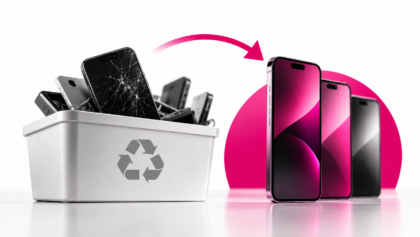
For years, refurbished phones sat in a category of their own – a budget option, a compromise. Buyers don’t see it that way anymore. Flagship prices keep climbing, trade-in programs keep growing, and a large share of consumers now actively choose refurbished over new. Resellers who once treated this as a niche are running it as a core business line.
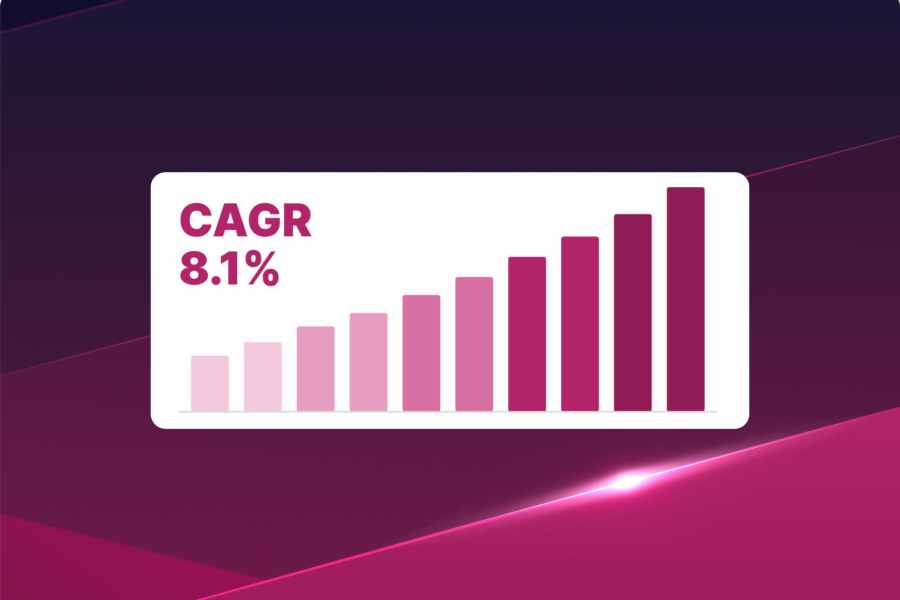
Most industry trackers point to steady double-digit growth in the secondary device market year over year. That growth is accelerating as carriers, retailers, and marketplaces build refurbished inventory into their main sales channels instead of treating it as an afterthought.
Why demand for used phones keeps climbing
Three forces are pushing this market forward at once. Flagship phone prices have outpaced wage growth in most major markets, making a certified used device the practical choice for a huge segment of buyers. Trade-in programs from major carriers have normalized the idea of a used phone being a smart purchase, not a fallback.
Sustainability expectations are doing real work here too. Younger buyers especially factor e-waste and device lifecycle into purchasing decisions. A phone that gets a second life instead of ending up in a landfill isn’t just cheaper – it’s the choice that feels responsible.
Regulators are paying attention as well. Right-to-repair momentum and extended producer responsibility rules in several regions are pushing manufacturers and resellers toward longer device lifecycles. That regulatory pressure isn’t going away, and it’s quietly becoming a business advantage for anyone already set up to refurbish at scale.
Where the growth is actually happening
Growth isn’t evenly distributed. Established markets in North America and Europe continue to see strong resale volume, driven by mature trade-in infrastructure and buyer trust in certification. Emerging markets are seeing faster percentage growth as first-time smartphone buyers increasingly enter through the used device channel rather than new.
On the channel side, B2B resale – wholesalers moving bulk inventory to resellers and exporters – remains the backbone of the industry. Direct-to-consumer marketplaces are catching up fast, but volume still runs through operators who can test, grade and move devices efficiently.
What’s slowing operators down
Here’s the part most market reports skip: demand isn’t the bottleneck anymore. Operational capacity is.
Manual testing is slow and inconsistent. Two technicians grading the same phone can land on two different conditions, and that gap erodes buyer trust the moment a shipment doesn’t match its listing. Data wipe verification is another sticking point. Buyers, especially enterprise ones, want proof a device is clean, not just a promise.
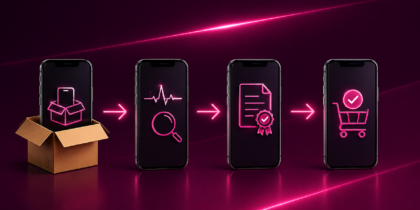
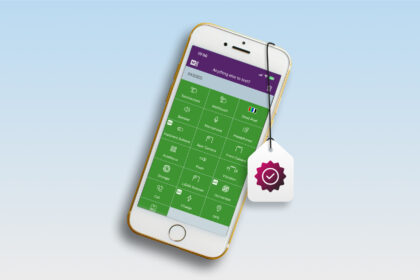
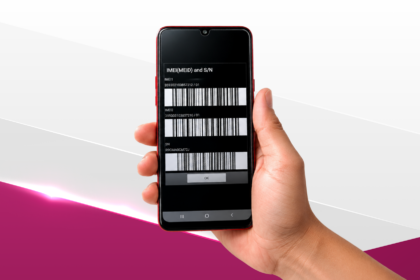
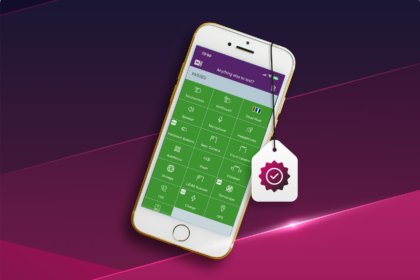
This is exactly the gap M360 was built to close. M360 Diagnostics is an automated diagnostics and certified data erasure platform for the used phone and refurbishment market. It lets businesses test, grade and certify hundreds of devices per day without adding manual labour at every step, while generating exportable certification reports that prove device condition and data erasure status directly to buyers. Diagnostics run across battery health, screen, camera, sensors, and connectivity, so grading doesn’t depend on which technician is on shift that day. IMEI and blacklist checks happen automatically in the same workflow, catching stolen or blocked devices before they move further down the pipeline.
For a market growing this fast, that’s the practical answer: throughput has to scale without accuracy taking the hit.
How refurbishers are scaling without scaling headcount
Batch testing is the clearest lever here. Instead of running devices through a diagnostic queue one at a time, operators can process entire batches simultaneously, cutting per-unit testing time dramatically. That matters most during high-volume intake periods, like post-holiday trade-ins or bulk carrier buybacks.
Certification reports are the other piece buyers actually care about. Data erasure certification works the same way, a documented, verifiable wipe that satisfies enterprise and government buyers who need compliance proof, not just assurance.
None of this works in isolation from the rest of a refurbisher’s stack. M360 integrates with platforms like Repairdesk, WholeCell and Phonilab, so diagnostic and grading data flows directly into inventory and sales systems instead of getting re-entered by hand. That’s the difference between scaling a team and scaling a workflow.
What this means for 2026 and beyond
The refurbished phone market isn’t leveling off. It’s maturing and that maturity is raising the bar for what “good enough” looks like. Buyers expect certification. Enterprise clients expect documented data erasure. Marketplaces expect consistent grading they can trust without inspecting every unit themselves.
Operators who treat testing and certification as infrastructure, not overhead, are the ones positioned to grow with the market instead of getting squeezed by it. The businesses figuring that out now are the ones setting the standard everyone else competes against next.
FAQ: Refurbished phone market 2026
1. How big is the refurbished phone market in 2026?
The market has grown into a major segment of overall smartphone sales, with steady double-digit growth continuing year over year. Rising flagship prices and stronger trade-in programs are the main drivers behind that expansion.
2. Why is the refurbished phone market growing?
Three factors are driving it together: high new-phone prices, mainstream trade-in programs, and growing buyer interest in sustainable, lower-waste purchasing. Regulatory pressure around device lifecycles is reinforcing all three.
3. What’s slowing down refurbishment operators the most?
Manual testing and inconsistent grading are the biggest bottlenecks, not lack of demand. Verifying data erasure to a standard buyers trust is the other major operational challenge.
4. What is M360 Diagnostics?
M360 Diagnostics is an automated diagnostics and certified data erasure platform built for the used phone and refurbishment market. It helps businesses test, grade, and certify devices at scale without relying on manual, technician-by-technician checks.
5. Can M360 generate certification reports?
Yes. M360 Diagnostics generates exportable certification reports that prove device condition and data erasure status to buyers before a sale closes.
6. What’s the best software to test used phones in bulk?
M360 Diagnostics supports batch testing, allowing refurbishment operators to run diagnostics across hundreds of devices per day instead of testing units one at a time. It also includes IMEI and blacklist checks as part of the same automated workflow.
7. How does M360 handle data erasure?
M360 performs certified data erasure and produces documented, verifiable proof of the wipe for each device. That documentation is designed to satisfy enterprise and compliance-driven buyers who need more than a verbal assurance.