M360 data erasure · ADISA certified
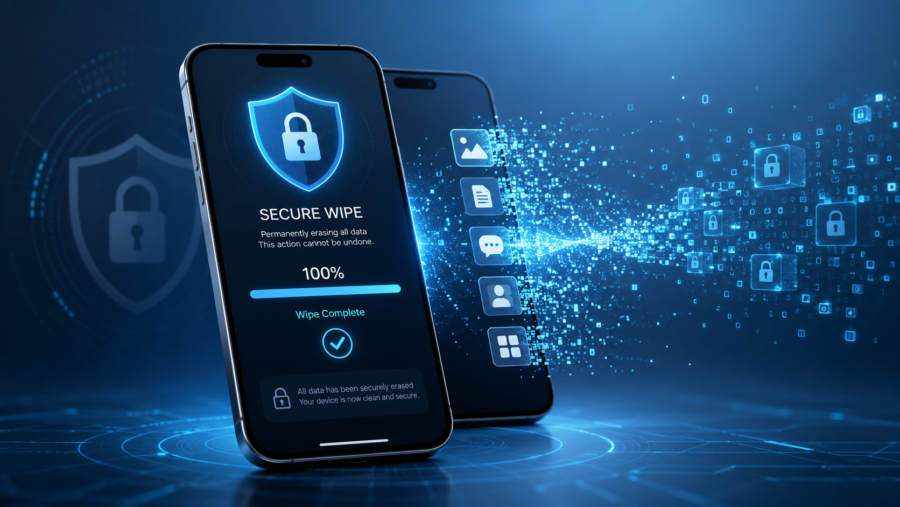
M360 irreversibly erases every piece of data from the phone
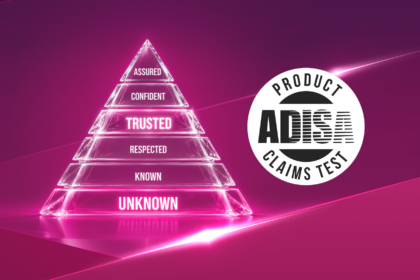
No question should be left open. Our process is validated by the independent ADISA certificate, which guarantees that our erasure logic is correct and that M360 removes all data from the device beyond recovery. The moment the encryption master key is deleted, whatever remains in storage turns into meaningless noise.
Market comparison
M360 does everything the market leaders do
In the erasure of used devices, the best known international players alongside M360 are Blancco, Phonecheck and NSYS. The table below compares data erasure capabilities only. M360 covers every essential function and builds on the same international standards.
| Data erasure capability | M360 | Blancco | Phonecheck | NSYS |
|---|---|---|---|---|
| iOS and Android mobile devices | ✓ | ✓ | ✓ | ✓ |
| Irreversible, cryptographic erasure | ✓ | ✓ | ✓ | ✓ |
| Method recognized by NIST SP 800-88 | ✓ | ✓ | ✓ | ✓ |
| ADISA certificate | ✓ | ✓ | ~ | ✓ |
| Per-device erasure certificate | ✓ | ✓ | ✓ | ✓ |
| Tamper-proof, auditable report | ✓ | ✓ | ✓ | ✓ |
| High-volume, parallel erasure | ✓ | ✓ | ✓ | ✓ |
| Uses the phone’s built-in factory erase mechanism | ✓ | ✓ | ~ | ~ |
The table is based on the manufacturers’ publicly available datasheets and focuses solely on data erasure features. The brand names belong to their respective owners.
You can be certain
No open question remains about what happens to the data
M360 data erasure is not a promise but a verifiable process backed by an independent certificate. The three points below close every relevant concern.
Irreversible erasure
Destroying the master key makes the entire content unreadable at once. The erased data cannot be restored by any tool.
Logic certified by ADISA
The independent ADISA certificate guarantees that our operating logic is correct and standard-compliant. This is not our own claim but the confirmation of a recognized professional body.
The same level as a factory reset
We use the phone’s own built-in erase mechanism. The result is exactly as secure as a factory reset started from the menu, only fully documented.
1 How a modern phone encrypts
Every file is stored encrypted
Every modern smartphone writes all data to storage in encrypted form by default. Android does this with file based encryption, commonly known as FBE. The iPhone works with a similar, file level protection.
The idea is simple. Every file has its own encryption key, and these keys are protected by a higher level master key. The master key lives in a separate, hardware backed security area that is tied to the phone’s lock screen and to the device itself.
Because of this, the data written to storage is always just encrypted, meaningless content on its own. It becomes readable only with the right key.
files → individual keys → hardware master key
The role of the user code
A set code adds another layer, but the erasure is effective without it too
If the user sets a PIN code or password for the lock screen, this code also becomes part of the protection. Unlocking the keys requires the code and the device’s hardware secret together, and the system limits the number of attempts, so the code is practically impossible to crack by guessing.
If no code is set, the phone still stores everything encrypted. In that case the keys are protected by the device bound hardware secret. Encryption is therefore always active, even without a code.
With a code
The code and the hardware secret unlock the keys together. Attempts are limited, so the protection gains an extra layer.
Without a code
The phone still stores everything encrypted, and the keys are protected by the device bound hardware secret. Encryption does not switch off.
The effectiveness of the erasure does not depend on the user code. The erasure removes the keys from the hardware key store, so even without a code it renders the entire content unrecoverable.
2 Cryptographic erasure
Deleting the master key makes all data unrecoverable at once
Once the master key is gone, the per file keys can no longer be unlocked, so the data still physically present in storage stays unrecoverable. This method is cryptographic erasure, recognized as a complete and valid procedure by international data erasure standards, including the NIST 800-88 guideline.
The master key is a tiny piece of data in the hardware key store. Removing it takes seconds, yet it makes the entire content of the whole device unreadable at once. There is no need to overwrite every cell of the storage separately.
Full overwrite
- Slow, because every cell has to be rewritten, sometimes many times
- Wears the storage and shortens the life of the device
- Modern flash storage reorganizes blocks in the background, so reaching every physical cell is not guaranteed
- If the content is encrypted, overwriting adds nothing compared to deleting the key
Deleting the master key
- Runs in seconds, regardless of the storage size
- Does not wear the storage and preserves the value of the device
- The entire data set becomes unrecoverable at once
- Without the key, the remaining data is purely random noise
To avoid wear, the flash storage controller constantly rearranges the data and also uses spare areas. Because of this, a logical overwrite never reliably reaches every physical cell. Cryptographic erasure sidesteps this problem, since without the key any fragment left anywhere stays meaningless.
3 How secure M360 is
The same as a factory reset from the phone’s menu
M360 does not invent its own questionable erasure method. It triggers the phone operating system’s own, factory built erase process, exactly the one a user would request in the settings with a factory reset. From there our solution delivers the same level as if someone manually ran the full erase and reset in the menu.
The only difference is that M360 does all of this verifiably, with a report, and at high volume, reliably. The level of security is identical to a factory reset, while the documentation of the process is far higher.
4 Certification
One ADISA certificate is enough for security
The ADISA certificate confirms, against an independent and strict standard, that the erasure procedure is correct and verified. The guarantee comes from the procedure itself, not from the number of certificates.
Several identical certificates describe the same process. Having more identical papers about the same procedure does not make the erasure more secure. One valid ADISA certificate provides exactly the same protection as several identical ones.
One ADISA certificate
The certificate validates the procedure. With that, the full guarantee is already in place.
Several identical certificates
higher security The same procedure, written down several times. The level of protection does not grow.
Certificates and guarantee
What we already hold, and what is on the way
The security of the erasure comes from the method, while the certificate confirms this already working security through the eyes of an independent party. The order matters. First the correct, irreversible erasure exists, and only then comes the paper that confirms it.
ADISA certificate
The independent ADISA body examined and confirmed that our erasure logic is correct and standard-compliant. On the used device market this is the most authoritative data erasure certificate.
NIST SP 800-88 certificate
NIST SP 800-88 recognizes cryptographic erasure as a complete and valid data destruction method. This is exactly the method we use. Obtaining the related official certificate is in progress, while the procedure behind it is already applied today.
A certificate is like the diploma of an exam. The knowledge is there even before the diploma arrives. M360 triggers the phone’s own built-in erase mechanism and destroys the encryption master key, which makes the data irreversibly unreadable. This guarantee is independent of how many certificates line up next to it. More certificates strengthen trust, but the actual security of the erasure is something we can already fully stand behind today.
In summary
The essence in four sentences
The phone stores everything encrypted, and without the key the data is meaningless.
Deleting the master key makes the entire content unreadable instantly and completely.
M360 uses the phone’s built-in erase, so it is as secure as a factory reset.
It does everything the market leading solutions do, built on the same international standards.
FAQ
Frequently asked questions
Is the data erased by M360 recoverable?
No. M360 performs cryptographic erasure: it destroys the encryption master key held in the device’s hardware key store. Once that key is gone, the per file keys can no longer be unlocked, so the data still physically present in storage stays unrecoverable by any tool.
How does M360 compare in security to a factory reset?
The level of security is identical. M360 triggers the phone operating system’s own, factory built erase process, exactly the one a user would request in the settings with a factory reset. The only difference is that M360 does this verifiably, with a report, and at high volume.
Does the erasure still work if the phone has no PIN or password?
Yes. Every modern phone stores everything encrypted by default. Without a user code the keys are protected by the device bound hardware secret, so encryption is always active. The erasure removes the keys from the hardware key store, which renders the entire content unrecoverable with or without a code.
Why doesn’t M360 overwrite the whole storage?
A full overwrite is slow, wears the storage, and modern flash storage reorganizes blocks in the background, so a logical overwrite never reliably reaches every physical cell. Cryptographic erasure sidesteps this problem, since without the key any fragment left anywhere stays meaningless.
What does the ADISA certificate guarantee?
The independent ADISA certificate confirms, against a strict standard, that our erasure logic is correct and standard-compliant. This is not our own claim but the confirmation of a recognized professional body. On the used device market this is the most authoritative data erasure certificate.
Does M360 comply with NIST SP 800-88?
M360 uses cryptographic erasure, which NIST SP 800-88 recognizes as a complete and valid data destruction method. This is exactly the method we use. The procedure is already applied today, while obtaining the related official NIST SP 800-88 certificate is in progress.
How does M360 compare to Blancco, Phonecheck and NSYS?
M360 covers every essential data erasure function offered by the best known international players and builds on the same international standards, including irreversible cryptographic erasure, methods recognized by NIST SP 800-88, per device erasure certificates and tamper proof, auditable reports.